People's Liberation Army
Serve the People!The People's Liberation Army is the central institution shaping Wu Dawang’s life in Serve the People!: it supplies his livelihood and ambitions, disciplines his conduct through political and military rules, and determines both his private circumstances and his eventual transition to civilian work. The novel presents it through everyday routines and personnel decisions as well as revolutionary language, revealing the distance between public ideals and the practical operation of rank, patronage, and organizational change.
Rules, Routine, and Revolutionary Service
The Army’s expectations are conveyed through a three-part rule of conduct: soldiers must not say, ask, or do what they should not. Wu Dawang understands the rule well enough to avoid probing the Division Commander’s cryptic approval of his critique; he returns to the kitchen and carries on with his work. The episode establishes discretion as a practical skill alongside the formal language of revolutionary service.
Military life also offers Wu Dawang a marked material change from the farming village he leaves. Exercise resembles the labor of busy agricultural seasons, while political study is no more tedious to him than periods of slack between planting and harvest. Government-provided clothing, bedding, and food—including as many steamed rolls as he can eat, as well as meat—make army life feel to him like a continual New Year. He responds by rising early to sweep, staying up to read editorials and record his thoughts, drilling on Sundays, and washing his comrades’ clothes.
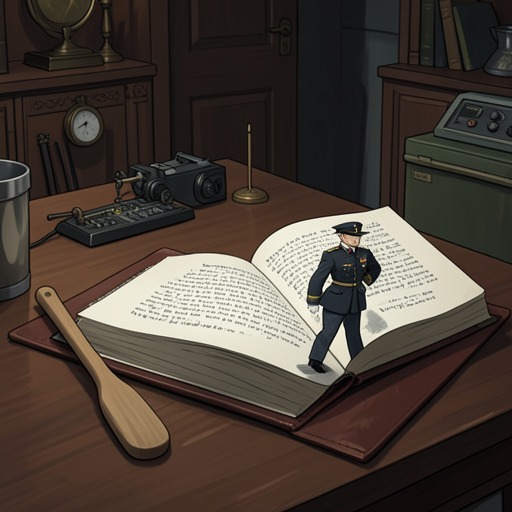
Around him, military experience is shaped by a hierarchy of titles and rewards. Wu Dawang arrives as an ambitious soldier with commendations and repeated recognition as a Model Soldier. His performance at a logistics competition, where he recites Mao Zedong’s writings and prepares a four-dish meal and soup within thirty minutes, helps secure his selection as the Division Commander’s full-time orderly and cook. Competence in both political recitation and practical work becomes a route to notice and advancement.
Advancement and Institutional Gateways
Wu Dawang’s military career begins as part of a family plan. Accountant Zhao sees enlistment as a path to Party membership, commendations, and official status, and therefore to an urban residence and a better life for his daughter, Zhao Ezi. Wu Dawang makes that expectation explicit in a written premarital pledge: he promises to earn commendations within a year, join the Party within two, and become an official within three, or else accept the pledge’s severe personal terms.
The promised advancement does not arrive on schedule. After two years of effort, Wu Dawang has neither a commendation nor Party membership, and letters from Zhao Ezi and her father intensify his anxiety. The vacancy of Sergeant of the Catering Squad offers a new opening: such work is dirty and exhausting, but its unpopularity makes advancement more likely. Competing with seven other soldiers, Wu Dawang wins the Political Instructor’s attention through his willingness to perform menial service, and is transferred to the squad as Deputy Sergeant with responsibility for the company’s food and water.
The new post changes his prospects. Within the next year and a half, he becomes a full Sergeant, joins the Party, and receives commendations and awards with the Political Instructor’s support. Yet one element of his pledge remains unmet: the official’s four-pocket jacket stays beyond reach. His career thus depends not only on diligence but on available quotas, health assessments, competition from soldiers in other units, and decisions by superiors. Military advancement is at once a formal ladder and a system in which personal sponsorship can affect who climbs.
Private Life under Military Authority
The Army’s institutional reach extends into Wu Dawang’s work in the Division Commander’s household. When the Political Instructor rebukes him for failing to serve the Division Commander and his wife properly, he frames domestic attention as a matter of military responsibility: the Commander must be able to concentrate on meetings in Beijing, the Division must remain ready for battle, and the Army’s larger mission depends on the orderly’s performance. The speech inflates a household dispute into a matter of organizational readiness, showing how political language turns private service into public duty.
The same logic shapes Wu Dawang’s relationship with Liu Lian. After their liaison begins, Liu Lian tells the company Captain and Political Instructor that she is afraid to remain alone in the house at night while her husband is away. She reports that Wu Dawang has since given complete satisfaction as her orderly and asks that he sleep in the house rather than return to barracks. His superiors agree, emphasizing that any failure by an orderly reflects on the company and its Party representatives. An arrangement made in the language of duty therefore gives the pair continuing access to each other while preserving the appearance of ordinary household service.
That appearance is maintained through routine work. Wu Dawang continues tending the vegetable garden and the flowers and shrubs; to passersby, the orderly still appears to be carrying out his post. The gap between the public role and the private relationship is sustained within the very routines by which the Army supervises service. Later, when Wu Dawang returns from leave, the Political Instructor’s careful welcome and explanation reassure him that the liaison remains undiscovered. Military authority is not a single, uniform force here: local superiors can admonish, accommodate, protect, or redirect him through their decisions.
Restructuring, Demobilization, and Significance
A decisive institutional change comes when the Division Commander volunteers at a Beijing seminar organized by the Central Military Commission to test a pilot scheme for streamlining and restructuring the Army. The Division is to be disbanded, and companies are divided between demobilization and transfer. Promotions are cancelled during the upheaval, apparently bringing Wu Dawang’s hope of becoming an official to another end.
At the same time, the Commander makes an exception for Wu Dawang. Because the Sergeant is a favorite of the Commander and his wife, instructions are left for a city job in Wu Dawang’s native province, relocation for his family, and work for his wife. The arrangement demonstrates how private favor and formal reorganization intersect: the general promotion system is suspended, but an individual connection still secures a civilian position and a household move.
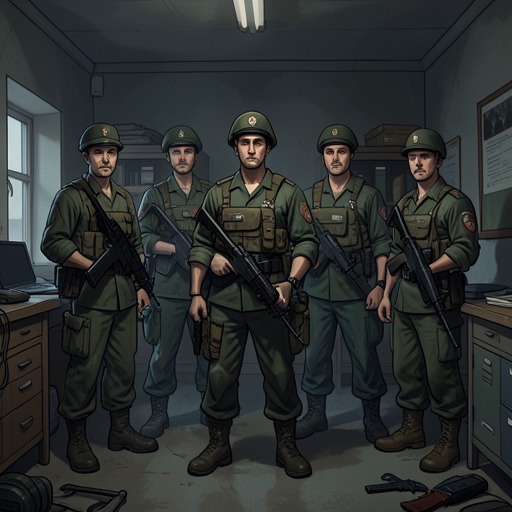
The transition is carried out with striking speed and precision. The company supplies cardboard boxes, wooden crates, and rope for Wu Dawang’s belongings; though his train is not scheduled to leave until 12:30 that night, the officers arrange a farewell supper and meeting. In front of a hundred uniformed soldiers, the Political Instructor announces Wu Dawang’s special early discharge for factory work. The Head of Management then awards him the Third Order of Merit and calls him an Exemplary Servant of the People—the only soldier in the Division to receive that distinction. The public ceremony gives his departure the form of a military honor, even though the officers and Wu Dawang have not known in advance how the evening will end.
The Army is therefore both the structure through which Wu Dawang makes a future and the institution that abruptly revises it. Its ideals of service coexist with rules of silence, competition for rank, personal influence, and administrative decisions that can cancel promotion or end a unit’s existence. The novel’s contrast between revolutionary ceremony and the practical allocation of jobs and leave makes the institution’s power legible in the details of one soldier’s career.